Welcome to Our Sony Alpha Shooters Forum

Be apart of something great, join today!

Birds Birds not in Flight Thread - Post Your Shots Here

C
DSC06533.jpg
  • ILCE-1
  • FE 200-600mm F5.6-6.3 G OSS + 1.4X Teleconverter
  • 840.0 mm
  • ƒ/10
  • 1/1600 sec
  • ISO 6400
old and wet but, still singing.
 
Great Blue Heron fishing at a nearby lake...

GBH1 Final SM.jpg
  • ILCE-1M2
  • 600.0 mm
  • ƒ/6.3
  • 1/2500 sec
  • ISO 640


GBH2 Final SM.jpg
  • ILCE-1M2
  • 600.0 mm
  • ƒ/6.3
  • 1/2000 sec
  • ISO 400


GBH3 Final SM.jpg
  • ILCE-1M2
  • 600.0 mm
  • ƒ/6.3
  • 1/2000 sec
  • ISO 400


Dinner is served!


GBH4 FInal SM.jpg
  • ILCE-1M2
  • 600.0 mm
  • ƒ/6.3
  • 1/2000 sec
  • ISO 400
 
Some from an outing this morning.
Ceder Waxwing
Ceder Waxwing - 1st state - 05172025 - 04 - DN.jpg
  • ILCE-1M2
  • Sony FE 200–600mm F5.6–6.3 G OSS (SEL200600G)
  • 600.0 mm
  • ƒ/6.3
  • 1/800 sec
  • ISO 800


White-Eyed Vireo
White-Eyed Vireo - 1st state - 05172025 - 04 - DN.jpg
  • ILCE-1M2
  • Sony FE 200–600mm F5.6–6.3 G OSS (SEL200600G)
  • 600.0 mm
  • ƒ/6.3
  • 1/800 sec
  • ISO 10000


Blackpoll Warbler
Male
Blackpoll Warbler - 1st state - 05172025 - 04 - DN.jpg
  • ILCE-1M2
  • Sony FE 200–600mm F5.6–6.3 G OSS (SEL200600G)
  • 600.0 mm
  • ƒ/6.3
  • 1/640 sec
  • ISO 8000

Female
Blackpoll Warbler - 1st state - 05172025 - 11 - DN.jpg
  • ILCE-1M2
  • Sony FE 200–600mm F5.6–6.3 G OSS (SEL200600G)
  • 600.0 mm
  • ƒ/6.3
  • 1/800 sec
  • ISO 3200


Indigo Bunting
Indigo Bunting - 1st state - 05172025 - 03 - DN.jpg
  • ILCE-1M2
  • Sony FE 200–600mm F5.6–6.3 G OSS (SEL200600G)
  • 600.0 mm
  • ƒ/6.3
  • 1/800 sec
  • ISO 640


Common Yellowthroat
Common Yellowthroat - 1st state - 05172025 - 05 - DN.jpg
  • ILCE-1M2
  • Sony FE 200–600mm F5.6–6.3 G OSS (SEL200600G)
  • 600.0 mm
  • ƒ/11
  • 1/500 sec
  • ISO 400


Prairie Warbler
Prairie Warbler - 1st state - 05172025 - 01 - DN.jpg
  • ILCE-1M2
  • Sony FE 200–600mm F5.6–6.3 G OSS (SEL200600G)
  • 600.0 mm
  • ƒ/8
  • 1/800 sec
  • ISO 400


Mocking Bird - This one was being a real jerk in that it was mimicking about 6 different migratory birds
Mocking Bird - 1st state - 05172025 - 01 - DN.jpg
  • ILCE-1M2
  • Sony FE 200–600mm F5.6–6.3 G OSS (SEL200600G)
  • 600.0 mm
  • ƒ/6.3
  • 1/800 sec
  • ISO 2000
 
Some from an outing this morning.


Indigo Bunting
View attachment 74601

Looks like your new A1II is taking some mighty fine pictures there, David. (Although I'm sure you helped.... ;) )

I need to get out more. I really want to see (and photograph) an Indigo Bunting. Such a striking shade of blue!
 
Looks like your new A1II is taking some mighty fine pictures there, David. (Although I'm sure you helped.... ;) )

I need to get out more. I really want to see (and photograph) an Indigo Bunting. Such a striking shade of blue!
I think the A1ii did a little better job in picking up the birds especially in the darker moments of the outing. I still have some stuff to work out with it. The fact that I now have 2 cameras with the focus stacking feature did allow me to setup for the mushroom pick in the other thread and then watch for the Prairie Warbler was a nice thing. The * option on the Frame Rate dial has already starting paying off as I have reduced my overall shot count without feeling as though I am missing shots.

It is good to have a target bird. The Indigo is a nice one to target as it shares a liking for areas that a number of other interesting looking birds have. Indigo Buntings like forest edges along open non-maintained fields that have shrubs. So think farmland fields rather than mowed park land along wooded areas. This time of year they are going to be one of the more vocal birds in such areas.
 
Last edited:
The * option on the Frame Rate dial has already starting paying off as I have reduced my overall shot count without feeling as though I am missing shots.

Concur.

With the dial set to *, I have the red REC button set to cycle thru the different frame rates with each push. Now I can very quickly cycle between single shot and high-speed blasts (and everything in between) Very handy.

There are a few locations nearby like those non-maintained fields you described. Sounds like a good excuse for a field trip.
 
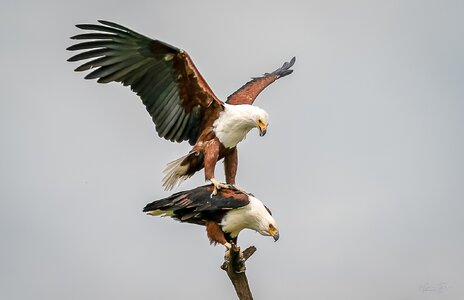
African Fish Eagles mating
 

Attachments

  • lionessLion Family-1777.jpg
    lionessLion Family-1777.jpg
    203.2 KB · Views: 71
Downy woodpeckers.

DWP1 Final.jpg
  • ILCE-1M2
  • 200.0 mm
  • ƒ/2.8
  • 1/3200 sec
  • ISO 40000


DWP3 Final.jpg
  • ILCE-1M2
  • 200.0 mm
  • ƒ/2.8
  • 1/2500 sec
  • ISO 20000
 
Yellow Breasted Chat - Taken a couple years to finally get a decent photo of one of these
Yellow-Breasted Chat - 1st State - 05202025 - 04 - DN.jpg
  • ILCE-1M2
  • Sony FE 200–600mm F5.6–6.3 G OSS (SEL200600G)
  • 600.0 mm
  • ƒ/6.3
  • 1/800 sec
  • ISO 1250

Yellow-Breasted Chat - 1st State - 05202025 - 01 - DN.jpg
  • ILCE-1M2
  • Sony FE 200–600mm F5.6–6.3 G OSS (SEL200600G)
  • 600.0 mm
  • ƒ/6.3
  • 1/800 sec
  • ISO 1600
 
Think you need to pull back on the denoising

Perhaps.

If I were going for absolute accuracy and a realistic resolution, I agree completely.

But given the dark conditions, high ISO and graininess of the original, I'm OK with pushing hard on the denoising and refocusing. In this case, I think it makes for more interesting pictures, in an art-deco kind of way.

The bark is really funky!
 
yea I've been trying to get a good shot for four years now!
 
I'm very new to this Forum and hope to shortly have my own 100-400 lens on my A6500.

How far are you away from the beautiful robin when taking the photo and what lens are you using?
 
I'm very new to this Forum and hope to shortly have my own 100-400 lens on my A6500.

How far are you away from the beautiful robin when taking the photo and what lens are you using?
Robins and Mocking Birds are birds that generally you can get quite close to at times. Often they will be half the distance of standard bird distance.
 
I'm very new to this Forum and hope to shortly have my own 100-400 lens on my A6500.

How far are you away from the beautiful robin when taking the photo and what lens are you using?

Hi Keith -

I was probably about 30 feet away, using the FE100-400mm. I didn't notice the bird was standing on 1 leg until I cropped and processed it.

(y)
 
Young American Robin
American Robin - Brandywine - 05252025 - 01 - DN.jpg
  • ILCE-1M2
  • Sony FE 200–600mm F5.6–6.3 G OSS (SEL200600G)
  • 600.0 mm
  • ƒ/6.3
  • 1/800 sec
  • ISO 2500


Double-Crested Cormorant. It appears that Cormorant rock lost its 2nd floor with the last big rain.
Double-Crested Cormorant - Brandywine - 05252025 - 01 - DN.jpg
  • ILCE-1M2
  • Sony FE 200–600mm F5.6–6.3 G OSS (SEL200600G)
  • 600.0 mm
  • ƒ/6.3
  • 1/800 sec
  • ISO 1600
 

* Please Consider Becoming a Site Supporter To Remove These Ads *

I'm very new to this Forum and hope to shortly have my own 100-400 lens on my A6500.

How far are you away from the beautiful robin when taking the photo and what lens are you using?
I am not the one to whom you are addressing this question, but to add another perspective, while shooting the GBH II was standing on my deck (which overlooks a small lake) and was shooting with the Sony A1 and the 200-600mm with 1.4x TC. This lens is way too heavy for me to carry and use anywhere than on my deck and often I use my tripod but sometimes do handhold (very briefly!) as well before setting the camera body and lens down on my deck railing. My 100-400mm, even with a 1.4x or 2.0x TC, would not have gotten me anywhere near as visually close to the subject.

The GBH was straight across from me on the shore at the other side of our small lake. I'm not good at estimating distances but I used that lens-and-TC combination at full reach and even at that still did a bit of judicious cropping when later post-processing and editing the image.

When shooting birds and wildlife, yes, it is best to get as close as one can, either physically or with a camera and lens combination, (and ideally both!) but even at that, quite often most wildlife photographers still also need to crop in order to present a compelling, strong image.
 
I am not the one to whom you are addressing this question, but to add another perspective, while shooting the GBH II was standing on my deck (which overlooks a small lake) and was shooting with the Sony A1 and the 200-600mm with 1.4x TC. This lens is way too heavy for me to carry and use anywhere than on my deck and often I use my tripod but sometimes do handhold (very briefly!) as well before setting the camera body and lens down on my deck railing. My 100-400mm, even with a 1.4x or 2.0x TC, would not have gotten me anywhere near as visually close to the subject.

The GBH was straight across from me on the shore at the other side of our small lake. I'm not good at estimating distances but I used that lens-and-TC combination at full reach and even at that still did a bit of judicious cropping when later post-processing and editing the image.

When shooting birds and wildlife, yes, it is best to get as close as one can, either physically or with a camera and lens combination, (and ideally both!) but even at that, quite often most wildlife photographers still also need to crop in order to present a compelling, strong image.
I notice the word 'crop' is regularly used on this forum and don't actually know what it means in the context of predominantly photo shots.

My interpretation if correct is what I do: When filming in UHD I regularly select a best frame of let us say a pigeon and just select the area I want from that clip and save as an image. Is that what you mean by crop?
 

New in Marketplace

Back
Top